Category: Articles

  • Human Calculation vs. Intuition of Devotion

    Human Calculation vs. Intuition of Devotion

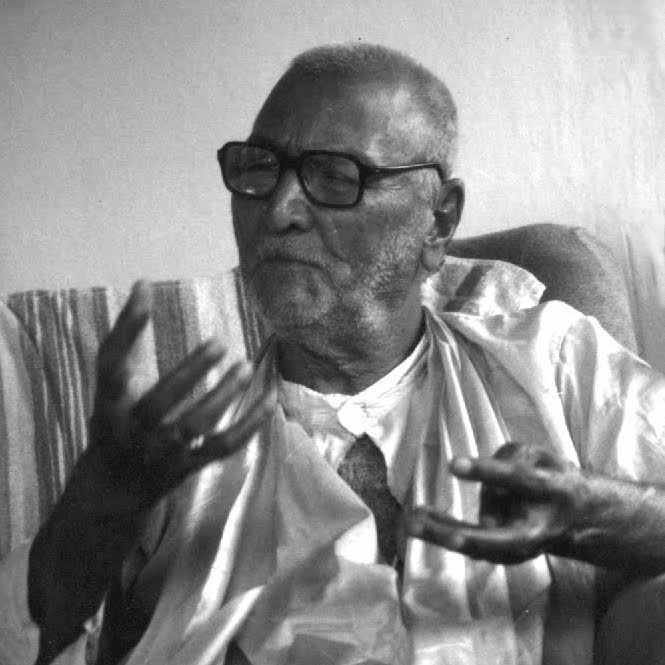
    Srila Sridhar Maharaja in response to the question why Srila Saraswati Thakur (Surya Siddhanta Saraswati), the expert astrologer, would defer to Bhaktivinode Thakur, who followed the calculations of P.N. Bachi.

    Sraddha is more than calculative truth. Through faith, sraddha, we can know the truth. The practice of great souls, mahajanas is more valuable than human calculation. Physical truth, material truth does not have so much value. After all, it is based on false attitude of mind. So this truth should not be given greater respect than the intuitive practices of a pure devotee. The intuition of a pure devotee should be given preference over the calculation of the ordinary persons here.

    Faith has got no connection with the actual so-called reality of this world. It is completely independent: sraddha mayoyam loka. There is a world which is guided only by faith. Faith is everything here. And that is of infinite nature: all-accomodating. The world of faith is all-accomodating. Anything and everything may be true there by the sweet will of the Lord.

    And here, mundane calculation has got no value. It is inconclusive, and destructive in its ultimate goal. So it should be rejected. The knowledge that comes under the fallible calculation of the exploiting souls, has got no value whatsoever. In the World of the Infinite, faith is the standard, the only standard to move hither and thither. Just as the compass is the only director in the infinite ocean. When sailors cannot see anything else, the compass is their only guide. Like that. In the world of infinite…

    svayam samuttirya sudustaram dyuman
    bhavaranavam bhimam adabhra-sauhrdah
    bhavat-padambhoruha-navam atra te
    nidhaya yatah sad-anugraho bhavan

    In Bhagavatam (10.2.31) it is mentioned that, like a compass, our only guide is the footsteps of those great personages that have traveled on the way. That should be our only guide. The way is marked by the holy footsteps of those that have gone to the highest quarter.

  • A Copernican Revolution of Theism

    A Copernican Revolution of Theism

    It’s the old unanswerable question: The Beatles or The Stones, Jesus or Jehovah, Allah or Yahweh, Vishnu or Shiva?

    There is a plurality of theistic conceptions orbiting the central truth vying for supremacy. Christians believe salvation can only be achieved through Jesus Christ, Muslims through Mohammed, Hindus through the grace of Sri Guru. Each offers a different conception of divinity on the basis of the realization of their saints and scriptural authority. Srila Sridhar Maharaja observes: “According to one’s inner necessity and hankering for truth, one comes in connection with a certain level of theistic conception and association.”

    God in the most general sense is perceived as embodying all-encompassing, infinite magnitude. A more refined vision reveals the underlying, all-pervasive presence of divinity. These are respectively the extremes of the Infinite. But a deep leap inward—up close and personal—reveals the all-attractive personality of Godhead. Not merely insurmountable or inescapable, but irresistible. The Krishna conception of divinity indicates being irresistibly drawn through love and attraction toward the very center of the Infinite—Reality the Beautiful.

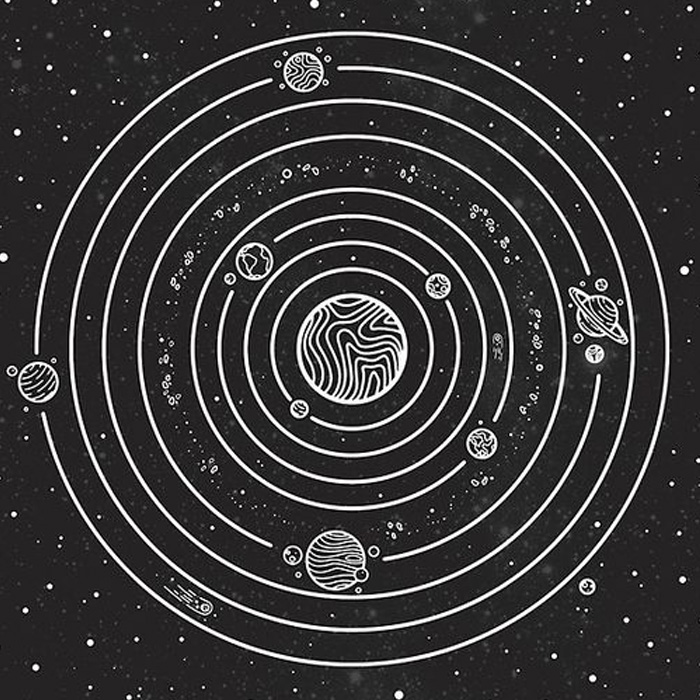
    At one stage it is admirable to recognize theistic plurality, but the next stage in progressive realization is to perceive gradation—to weigh and measure. Maverick Theologian John Hick writes in a letter to the Vatican: “…pluralist theocentrism, claims to be a way of going beyond Christocentrism, a paradigm shift, a Copernican revolution in which, instead of Christ being seen as the centre of the universe of faiths, all the religions, including Christianity, are seen as revolving around God, the ultimate transcendent divine reality.”

    All planets revolve around the sun, but not in the same orbit, and those that are nearest possess qualities and atmosphere most similar to the sun. All religions revolve the Absolute but by what standard should their respective depth of conception be judged?

    We recognize a plurality of currencies in the world of money: Dollars, Pounds, Rubles, etc. All are money. All are valuable. But all are not equal. Their relative value is established on the basis of an absolute standard. One may say, “The ‘Almighty Dollar’ is Supreme.” Someone else, “Her Royal Majesty’s Pound Sterling is Supreme.” And yet another, “The Ruble of Mother Russia is Supreme—no other currency is recognized or acceptable here.” But actual value will be measured against an absolute standard irrespective of local sentiment, prejudice, or utility.

    What then shall be the standard of measurement in the world of theism? Gaudiya Vaishnavas will assert that rasa is the currency of spiritual capital. Rasa, or intimacy, is the standard against which we measure the relative value of any spiritual conception.

    To the average citizen the president is a larger than life figure, generally thought to be unapproachable. Apropos to the distance in relationship one feels awe and reverence. But this should not be misconstrued as the only possible expression of earnest sentiment. The president also has an entourage whom, on account of nearness, has a glimpse into his personality beyond his presidential identity. Their awe and reverence is enhanced with affection. They are also privy to observe his jocular interaction with friends and close associates. Intimate friendship even allows for “irreverence,” while offensive in a lower stage, in a higher stage is charming and endearing. And there is increased intimacy with motherly affection and conjugal love. What is inappropriate for one is indispensable necessity for another.

    As one evolves spiritually, transcending the presidential identity of divinity, the natural, spontaneous flow of heart is released. This is known as bhakti rasa. The conception of rasa was minted by Srila Rupa Goswami in Bhakti Rasamrita Sindhu where he presents this science of spiritual evolution.

    Hinduism in general, and Gaudiya Vaishnavism in particular, necessarily accommodate variegated religious belief, and are thereby best suited to survive the inexorable proliferation of pluralistic democracy. But we must remember, one man’s salvation is another man’s hell. If “salvation,” or “heaven” is devoid of serving potential, a relationship of intimacy with the Personality of Godhead, Vaishnavas consider it undesirable.

  • The Body—Biological Expression of the Soul’s Illusion

    The Body—Biological Expression of the Soul’s Illusion

    ## Philosophy with a scientific basis
    The soul élan vital is in search of fulfillment, wandering throughout existence from one form of life to another until it at last evolves to the human level. Observing the various life forms we detect a gradual evolution of awareness, an unfolding of conscious development (and expression of will). What is the basis of all of this? Consciousness. Everything springs out of consciousness. The perception of circumstance (existence) and the body itself — is enabled by consciousness.

    An analogy that may provide insight: the reflection of the moon upon a pool of water appears to quiver with the ripples of the water. But actually it is only shining, reflecting upon the water, it is fixed, unmoved, unaffected. The soul from its spiritual location (transcending time, space) is shining, reflecting through modified consciousness upon the bodily circumstance. The body is the biological expression of the soul’s illusion: self-expression (based upon misconception — misperceived self), from subtle to gross, layer upon layer of ego, intellect, mind, and senses — generates the body. The soul is the subtle, illuminating (animating), conscious observer experiencing the body and its circumstance.

    Free will is operating at an optimum in human life. But there are limitations (based upon past use of free will — previous choices). Why are we forced (bound) to experience things against our will? Karma: action and reaction. Science says, “For every action there is an equal an opposite reaction.” Sounds simple (axiomatic) but the implications are complex. Especially if we consider how we are acting and reacting to and with others. Then it becomes intricate, with many interrelated elements, factors, and difficult to comprehend (sometimes to the point of utter perplexity). In the bewilderment of frustration even theists express resentment, “How can God allow this!” Rather, how can He not (if He does not interfere with free will). Certainly God (the Infinite) must have better things to do that to inflict senseless suffering upon his extended family (the finite)?

    Trying to counteract anticipated reactions by “being good,” “doing what’s right,” or through education, science (technology) may buffer or inure one temporarily but ultimately prove futile. What is unfolding is not so obvious and easy to identify. There are karmic seeds (reactions) in different stages of germination (development). Some are sprouted; some nearing maturity and some are bearing fruit (activated). At the same time, as human beings, we are making new choices thereby creating and complicating future reactions. It is incredibly complex. That we do not readily perceive any causal connection from our actions in this life is understandable — it may not be limited to this life.

    That means that we are born into accommodating circumstances, generated as reactions to past actions. As the result of the exercise of free will we engender circumstance (individually — collectively). To disallow that, is in a sense, to deny someone’s personhood (individuality). As for children, relatives etc. we share a certain degree of karmic destiny but cannot be solely responsible for their circumstances. All factors taken into consideration that is simply not possible (realistic). And by an overarching sense of our personal responsibility we may even unintentionally devalue their sense of self.

    If someone is in an unfortunate condition or circumstance does that mean then that they are by inference a “bad person?” Certainly not. They may be the most wonderful person we know, but it cannot be denied that they are under the throes of karmic reaction. And it is only natural to wonder, “Why?” There was a book titled, “Why do bad things happen to good people?” The answer in a word — karma. All things considered, this may be the only answer that even comes close to making sense. It is philosophy with a scientific basis (therefore tenable).

    Life has unavoidable suffering. We are all suffering in varying degrees. Four things in particular are inescapable: birth, death, aging, and disease. Still, we want everyone to enjoy a basic circumstance we might call “normal life.” We do not like to see anyone suffer unnecessarily or excessively — but sometimes it is beyond our control. We do not mean to suggest a passive retreat into fatalism (abandoning duty, responsibilities or doing nothing to improve conditions or ourselves) but we must become detached from the results (having things our way). Ultimately, all things are not meant to please us. It is not a realistic expectation and will end in disappointment and frustration.

    Srila Sridhar Maharaja once said, “Suspicion and hesitation are the worst enemies. We may be near to the truth, but because of our previous karma, our suspicious nature deceives us…. According to the result of our karma we shall be placed in a particular environment, and we must start our spiritual life from wherever we are placed; we must begin our work of conquering all those samskarasSamskara is defined as: the faculty of memory, mental impression or recollection, impression on the mind of acts done in a former state of existence. that comprise the mental encasement we are living in.”

    As opposed to being helplessly trapped by karmic circumstance the Vedas inform us that human life is the opportunity to get free (liberation) from the world of death. The beginning is to redirect our focus away from the endless diversions of mundane seduction that rob the soul of its wealth — belief of a life of prospect in the subtle domain of faith. It is not possible for the eternal to find fulfillment in the temporal. As a sunray’s home is in the sun, the radiant soul’s home is in the domain of the conscious sun, the Supreme Being from whom it has emanated.

    Srila Sridhar Maharaja: “Sri Sukadeva Goswami explained to Maharaja Pariksit and all the topmost assembled sages, ‘This illusory world is full of variety and movement, and above it is the Brahman, the non-differentiated plane of the Absolute. But on the other side, there is again a differentiated and specified world, the adhoksaja world (beyond sense perception). This Brahman is not the ultimate existence, but crossing Brahman, on the other side, there is an adhoksaja world. There, we find Krishna-Lila, which is not a thing of this mundane world. You all know I have no charm for this world whatsoever. And my mind was attracted by the charm of that higher Lila. Today I shall speak to you all about Lila (divine pastimes).’”
  • What’s Hot in Eternity

    What’s Hot in Eternity

    Some years ago, Andrew Sullivan was asked by Tina Brown of the New Yorker to write an article about “religion.” His description and observations:

    “After routine flattery, she got to the point. ‘We have a fabulous issue coming up on religion, and Dick Avedon is photographing several religious figures and icons, and I wondered whether you could do an accompanying essay,’ she asked in her clipped, breathless tone. ‘About what?’ I asked. ‘Religion is a pretty big topic.’ ‘Oh, that would be up to you,’ Ms. Brown replied. ‘Anything that’s hot right now in religion. Anything hot.’

    …It was the crazed cult of contemporaneity, the insistent, relentless outer directedness of an editor who saw what was hot as always and everywhere preferable to what is true, … When a grown-up editor can actually ask a writer about what’s ‘hot’ in the questions of eternal life, the fate of the soul, and the meaning of existence, you have to wonder if, deep inside her, that’s all she actually sees.”

    Ms. Brown is credited with “reshaping” the magazine industry.

    And so we may not always be able to provide what’s hot, but perhaps what’s true.